Showing posts with label Central Heating. Show all posts

Tips For Cutting Rising Energy Costs

The main stream media is full of reasons why we should cut gas and electric usage. Ever increasing gas costs, not just in the UK but worldwide make it crucial to get the most out of your heating boiler and central heating system. You may be surprised to find out that a very high percentage of your gas and electric costs will be related to your heating system. Quick Tips. Read below for some simple ways in which you can take small changes to lower your daily energy expenses.

Save_On_Bills_Tips


Don’t use the boiler in areas where it is not required

You can easily turn off gas central heating radiators for a period without much change in temperature, so switch them off in any rooms that are not going to be used for a while, such as a spare room or toilet. If an area of your home is not used often, it really doesn’t need heating 24/7. Also, make sure to close doors on rooms when not in use to keep the warmth inside.


Don’t use the fire if you can use the central heating system

If gas or electric, the main fire of a home is not as efficient as the heating boiler. Furthermore it will not heat the rest of your residence. If you have a real fire, the presence of the chimney means that a lot of the heat generated gets put straight outside. So the gas central heating is much more efficient for heating than that of an electric or gas fire.


Stop Drafts With Proper Insulation

Stop those drafts. Pay special care to your doors and windows and insulate any obvious gaps. Use a foam based sealer to close off any spaces between your door frame and the window frames where they join the exterior wall. These type of gaps happen often in older dwellings as the foundations settle.


Wrap Up Warm

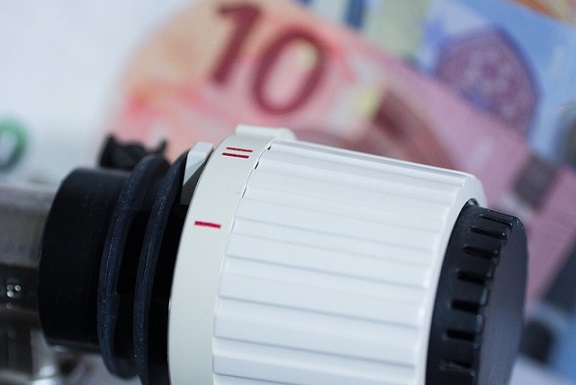
When you feel the room is a little cold, rather than turning the heating up, consider putting on some more layers of clothing as an alternative to turning up the room thermostat. Surprisingly, tiny decrease in the room thermostat can result in approximately a 5% - 10% reduction in your energy usage.


Finally

Insulate your central heating hot water tank if you have one. A cylinder which is not insulated will lose heat and cause you to use more energy to heat the hot water up to temperature again. Radiators warm the wall behind them and while not very nice if not done with some professionalism, the heat escaping can be bounced back into the room if you put aluminium foil at the back of the radiators. 


Draining Central Heating UK

A fully pumped central heating system can be drained to enable work to be carried out. fitting a temperature radiator valve or swapping a faulty radiator are common instances. Usually, this will be done by a professional, however, it is a job that can be completed by a competent DIYer can perform who has some understanding of heating systems. If not, for any DIY enthusiasts that wants to give it a go and save some money, these days there are many guides online, in video and text format that can help complete these types of jobs without too much difficulty. 


radiator-central_heating_UK
 

In most cases a thourough cleaning of the central heating is performed to clean the steel radiators. In advance of doing anything to the actual steel radiator itself you should turn off the central heating boiler and also any gas or electric that feeds the heating boiler. To be sure the system is totally clear you will need to be certain that no water is going into the central heating system.


Ball Valves

Your gas central heating system is filled up with water that comes from the tank. A widely used ball valve is put to use in the expansion cistern resembling the one used in many toilet systems.


How It Works

Once the water reaches it's highest level the ball floats on the top and closes the valve. As the water level drops, from something like cleaning, the ball falls lower in the tank venting the valve and letting more water to go into the gas central heating system.


Precautions

Water should not be permitted to go into the gas heating system if the clearing procedure is to finish fully. To stop any further water going in the the valve needs to be disabled / turned off.


Drain It Out

As soon as you have completed the above set up a pipeline from an outside empty to the outlet that is situated at the lower end of one of your steel radiators. The water from your heating radiator will stream through the pipeline and out of your steel radiator. 


No Water

Of course, if you want to empty the complete gas heating system you will need to attach the hose to one of the level metal radiators. You now need to be thorough and make double sure that all the water has been drained out and that practically zero water is getting into the system before any other servicing is taken out on the gas heating system.

If you need to complete this procedure quickly you can also open the bleed valves on the heating radiators on the higher floors of a residence. When the water is drained out you are free to repeat the exercise on the rest of your steel radiators.